Rechercher dans ce blog

Monday, May 2, 2022

Australia hikes its interest rate for the first time in more than a decade - CNBC

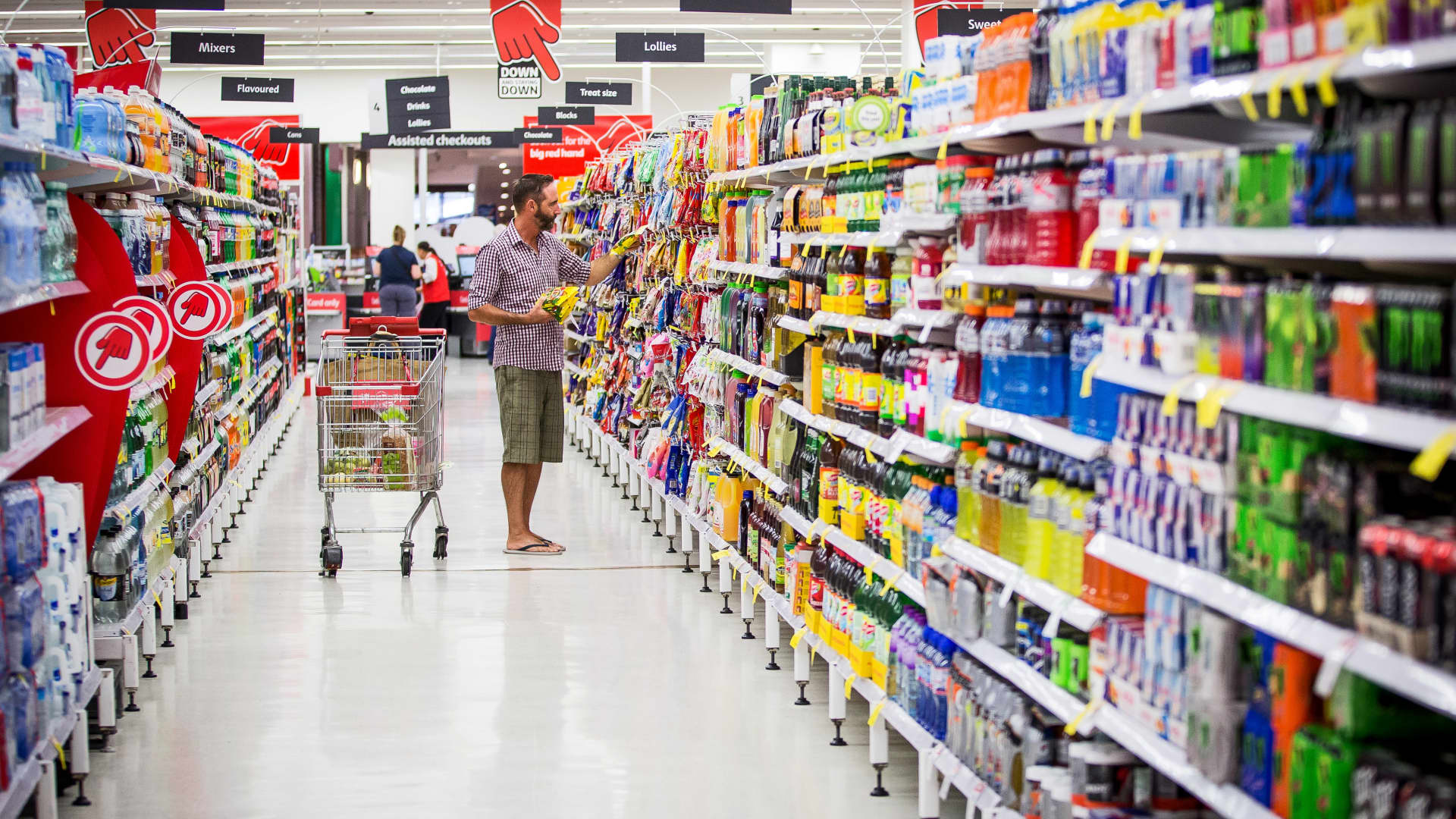
Australia's consumer price index jumped 2.1% for the first quarter in 2022, with prices of food, petrol and other consumer goods all surging.
Ian Waldie | Bloomberg | Getty Images

Australia hiked its interest rate for the first time in more than a decade, a widely expected move as consumer prices surge.

Its central bank said Tuesday that the cash rate will be increased by 25 basis points to 0.35% — the first rate hike since November 2010.

Philip Lowe, governor of the Reserve Bank of Australia, said it is the right time to begin withdrawing some of the "extraordinary monetary support" that was put in place to help the Australian economy during the pandemic.

"The economy has proven to be resilient and inflation has picked up more quickly, and to a higher level, than was expected," Lowe said in a statement. "There is also evidence that wages growth is picking up. Given this, and the very low level of interest rates, it is appropriate to start the process of normalising monetary conditions."

The hike was more than the analyst estimate for 15 basis points to 0.25%, according to the median forecast of a Reuters poll of 32 economists.

Analysts had widely expected the central bank to hike rates, given the rapid rise in inflation. Prices of food, petrol and other consumer goods were all up in the last quarter.

Australia's consumer price index jumped 2.1% for the first quarter, exceeding expectations of a 1.7% increase, data showed last week. On an annual basis, consumer inflation rocketed 5.1% — the highest since 2001 and higher than expectations for a 4.6% increase.

Lowe acknowledged in his statement that inflation had picked up more than expected, though it remains lower than in most other advanced economies.

"This rise in inflation largely reflects global factors. But domestic capacity constraints are increasingly playing a role and inflation pressures have broadened, with firms more prepared to pass through cost increases to consumer prices," he said.

A further increase in prices is expected in the near term, but as supply side disruptions are resolved, Lowe said inflation is expected to decline back toward the country's target range of between 2% to 3%.

The outlook for Australia's gross domestic product also "remains positive" and is forecast to grow by 4.25% over 2022 and 2% next year, Lowe said. However, he noted there were uncertainties that may hit the global economy, such as the Russia-Ukraine war and Covid disruptions in China.

This is breaking news. Please check back for updates.

Adblock test (Why?)


Australia hikes its interest rate for the first time in more than a decade - CNBC
Read More

US government bond prices fall further ahead of key Fed meeting - Financial Times

The yield on the US 10-year Treasury note touched 3 per cent for the first time in more than three years on Monday, as traders prepared for the Federal Reserve to raise interest rates again at a time of soaring inflation.

The yield on the government bond has profound effects on the economy, feeding into home mortgage rates and borrowing costs for companies. The higher yield, which rises when bond prices fall, is tightening financial conditions after two years of the coronavirus pandemic.

The US 10-year yield edged just above 3 per cent in early afternoon trading in New York, according to Bloomberg data — double its level at the start of the year and the highest since December 2018. By mid-afternoon it had dipped back to 2.99 per cent, up 0.05 percentage points on the day.

Yields have risen this year as the central bank takes action to try to stem US inflation, which hit 8.5 per cent on an annual basis in March — its fastest rate of increase in 40 years.

The combination of high inflation and a weakening global economic outlook has raised questions about how far the Fed will be able to lift interest rates without overburdening the economy.

Alex Roever, US rates strategist at JPMorgan, said the Fed was facing a “thick stew of uncertainties”, including rising labour costs, supply-chain problems and commodity prices that have increased after Russia’s invasion of Ukraine.

“While it’s clear that this economy doesn’t need stimulative monetary policy, what is less clear is the speed at which this stimulus should be removed, and the reasons for choosing that speed,” he added.

The Fed is widely expected to announce an extra large interest rate rise of half a percentage point at the end of its next policy meeting on Wednesday, and futures markets are pricing in similar half-point rises at the next two meetings.

Short-term US interest rates are now expected to be close to 2.5 per cent by the end of 2022, up from the current range of 0.25 to 0.5 per cent.

As investors brace for higher interest rates, there are signs of pressure in national economies. Surveys of industry executives released at the weekend showed activity in China’s sprawling factory sector contracted last month at the fastest pace since February 2020 as the country’s economy reels from coronavirus lockdowns.

At the same time, purchasing managers’ indices released on Monday pointed to slowing activity growth in the eurozone and US factory sectors.

The combination of gloomy data and rising bond yields weighed on stock markets, with the S&P 500 index falling 1.4 per cent. The tech-dominated Nasdaq Composite fell 0.9 per cent, adding to last week’s steep declines. The Nasdaq fell 13.3 per cent in April, its worst monthly drop since the depths of the global financial crisis in 2008.

Meanwhile, in Europe, the regional Stoxx 600 index slid as much as 3 per cent before trimming its losses to trade 1.5 per cent lower.

The dollar index, which measures the US currency against a basket of six others, rose 0.6 per cent as US bond yields climbed on Monday. The gauge is sitting just below the 20-year high it reached last week.

Adblock test (Why?)


US government bond prices fall further ahead of key Fed meeting - Financial Times
Read More

Biden kicks off $3 billion plan to boost battery production for electric vehicles - CNBC

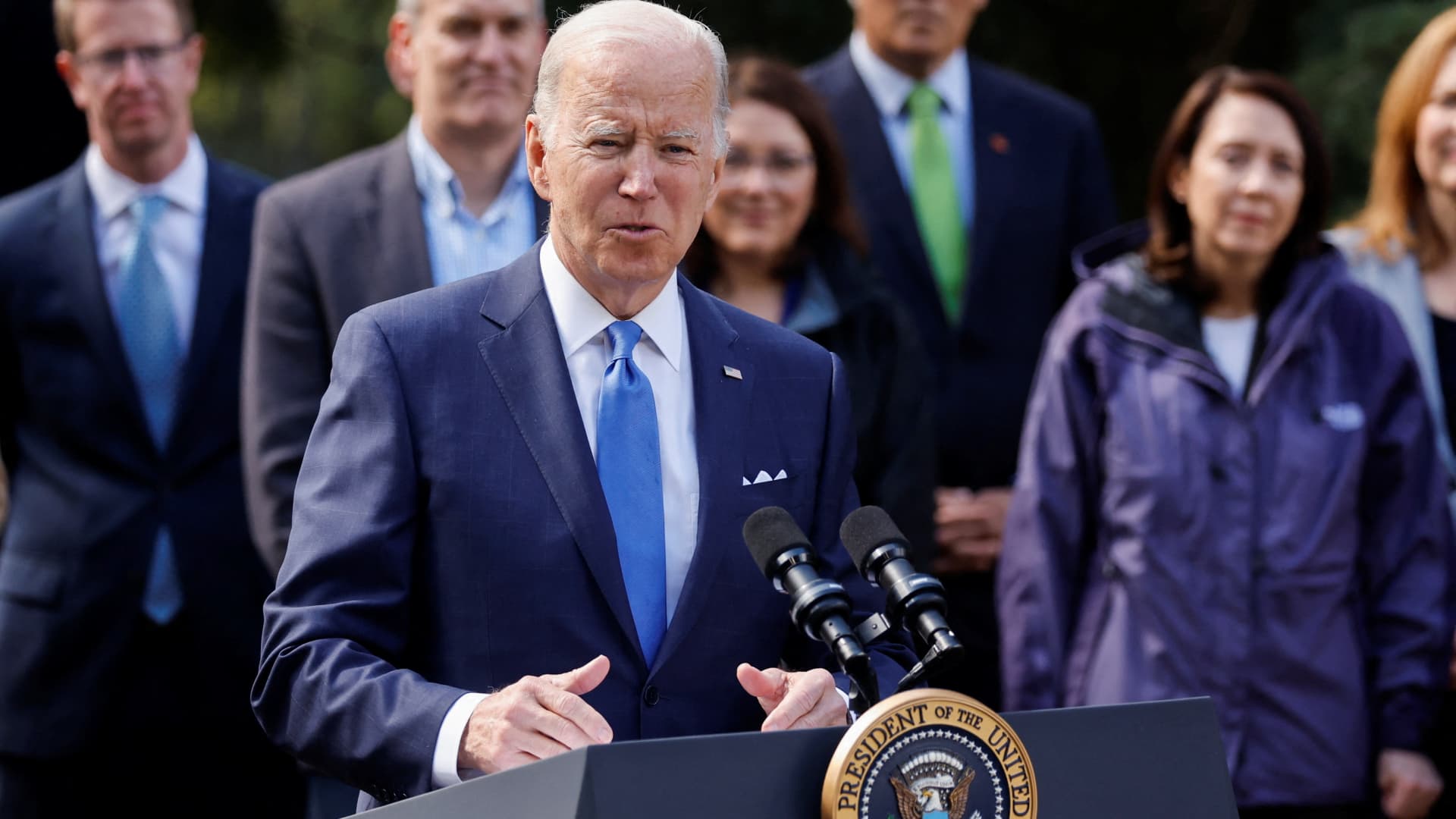
U.S. President Joe Biden delivers remarks about climate change and protecting national forests on Earth Day at Seward Park in Seattle, Washington, April 22, 2022.
Jonathan Ernst | Reuters

The Biden administration on Monday announced it will begin a $3.1 billion plan to boost domestic manufacturing of batteries, in a broader effort to shift the country away from gas-powered cars to electric vehicles.

The electrification of the transportation sector will be critical to mitigating human-caused climate change. The transportation sector is one of the largest contributors to U.S. greenhouse gas emissions, representing roughly one-third of emissions each year.

The funding will support grants aimed at building, retooling or expanding manufacturing of batteries and battery components, as well as establishing battery recycling facilities, according to the Department of Energy. The grants will be funded through President Joe Biden's $1 trillion bipartisan infrastructure law, which includes more than $7 billion to bolster the country's battery supply chain.

The move comes after the president in April invoked the Defense Production Act to encourage domestic production of minerals required to make batteries for EVs and long-term energy storage. That order could help companies receive federal funding for feasibility studies on projects that extract materials for EV production, such as lithium, nickel, cobalt, graphite and manganese.

"These made-in-America batteries are going to help reduce emissions and create opportunities across the country," White House National Climate Advisor Gina McCarthy said during a call with reporters on Monday.

The White House, which has set a goal of 50% electric vehicle sales by 2030, is also working to construct a national network of EV charging stations and to create tax incentives for consumers who buy EVs. The administration has also pledged to replace its federal fleet of 600,000 cars and trucks to electric power by 2035.

The U.S. is the world's third-largest market for EVs, behind China and Europe. Just 4% of new cars sold in the U.S. last year were electric, according to market research company Canalys.

"Positioning the United States front and center in meeting the growing demand for advanced batteries is how we boost our competitiveness and electrify our transportation system," U.S. Secretary of Energy Jennifer M. Granholm said in a statement on Monday.

Adblock test (Why?)


Biden kicks off $3 billion plan to boost battery production for electric vehicles - CNBC
Read More

Stocks making the biggest moves in the premarket: Activision Blizzard, Bilibili, Moody's and more - CNBC

Take a look at some of the biggest movers in the premarket:

Activision Blizzard (ATVI) – Activision shares jumped 2.7% in premarket trading after Warren Buffett told the Berkshire annual meeting that the company had increased its stake in the videogame maker.

Bilibili (BILI) – The China-based online gaming company's stock slid 4.2% in the premarket after Jefferies cut its price target to $51.30 from $61.50 per share, citing Bilibili's recent cut in its revenue outlook due to the resurgence of Covid cases in China.

Moody's (MCO) – The credit ratings company missed estimates by a penny a share, with quarterly profit of $2.89 per share. Revenue was slightly above analysts' projections. Moody's also cut its full-year revenue outlook due to its expectation of continued market volatility, and the stock fell 3.6% in the premarket.

Global Payments (GPN) – The payments technology company reported quarterly profit of $2.07 per share, beating estimates by 3 cents a share. Revenue also topped analysts' forecasts. The company also said it is making progress with a strategic review of its Netspend consumer business.

Berkshire Hathaway (BRK.B) – Berkshire posted a mixed quarter, with first-quarter earnings beating estimates as revenue fell short of Wall Street forecasts. Earnings were down from a year ago due to stock market turbulence and an increase in insurance claims.

HSBC (HSBC) – HSBC is under pressure from its largest shareholder — China-based insurance company Ping An – to break itself up, according to a source familiar with the matter who spoke to Reuters. Ping An is said to have presented its breakup plan to the bank's board of directors.

Moderna (MRNA) – Moderna said its Covid-19 vaccine for children under 6 years old will be ready for review by a Food and Drug Administration panel when it meets in June. Moderna applied for emergency use authorization for the treatment last week.

China EV Makers – Li Auto (LI) and Nio (NIO) both reported a drop in April deliveries compared to a year ago, saying production took a hit from the resurgence of Covid in China. Rival Xpeng (XPEV), however, reported an increase in deliveries compared to April 2021. Li Auto fell 1.7% in the premarket while Nio lost 2%.

Adblock test (Why?)


Stocks making the biggest moves in the premarket: Activision Blizzard, Bilibili, Moody's and more - CNBC
Read More

Apple Pay is anticompetitive, says EU in preliminary ruling - The Verge

Apple has been hit with an antitrust accusation by the European Union over its exclusion of rivals from its Apple Pay mobile payment system. The EU sent Apple a formal “Statement of Objections” with the preliminary view that Apple has abused its dominant position in mobile wallets on iOS.

“The Commission takes issue with the decision by Apple to prevent mobile wallets app developers, from accessing the necessary hardware and software (‘NFC input’) on its devices, to the benefit of its own solution, Apple Pay,” reads the decision. “Today’s Statement of Objections takes issue only with the access to NFC input by third-party developers of mobile wallets for payments in stores.”

According to the EU, Apple’s exclusionary behavior “leads to less innovation and less choice for consumers for mobile wallets on iPhones.”

This is only the initial formal stage of antitrust proceedings against Apple, and the company will have the chance to respond to the Commission’s list of objections. The EU notes that the sending of a Statement of Objections “does not prejudge the outcome of an investigation.”

Today’s ruling follows accusations last year that the company unfairly penalizes rival music streaming services. The EU has the ability to levy fines up to 10 percent of Apple’s global revenue ($36 billion) as well as force changes to the company’s business practices. In practice, though, any fines upheld against Apple’s likely appeal to the charges will be much smaller.

The Commission’s preliminary view against Apple once again shows the EU is leading the way in attempts to rein in the power of Big Tech. In past weeks, the bloc has passed two major legislative acts intended to counter the negative effects of digital behemoths. These are the Digital Services Act (DSA), which forces companies to take tighter control of harmful content on their platforms, and the Digital Markets Act (DMA), which is intended to level the business playing field, allowing smaller companies to compete with the largest corporations.

Apple has objected to a number of provisions outlined by the EU, particularly those that loosen the company’s grip over the App Store (from which Apple collects significant revenue).

Adblock test (Why?)


Apple Pay is anticompetitive, says EU in preliminary ruling - The Verge
Read More

Stock Market Today: Dow, S&P Live Updates for May 2 - Bloomberg

[unable to retrieve full-text content]

  1. Stock Market Today: Dow, S&P Live Updates for May 2  Bloomberg
  2. Stocks slide, dollar holds ground as US rate hike looms By Reuters  Investing.com
  3. Stock Futures Tick Higher After April Swoon  The Wall Street Journal
  4. U.S. Futures Steady, Dollar Up Amid Cautious Mood: Markets Wrap  BloombergQuint
  5. View Full Coverage on Google News

Stock Market Today: Dow, S&P Live Updates for May 2 - Bloomberg
Read More

Sunday, May 1, 2022

Ford Is Killing the F-150 Lightning Resale Market - MotorBiscuit

If you were planning on buying a Ford F-150 Lightning electric pickup truck just to flip it, you’ll have to wait for at least a year. Here’s how Ford is effectively killing the F-150 Lightning resale market before it booms.

Ford won’t let you resell your F-150 Lightning electric truck

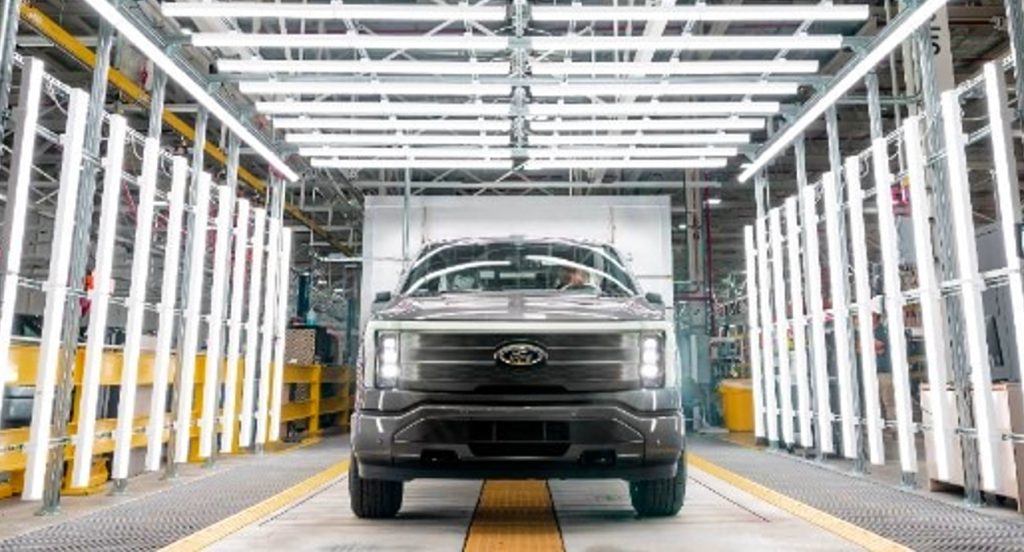
A gray 2022 Ford F-150 Lightning electric pickup truck.
The 2022 Ford F-150 Lightning | Ford

RELATED: Ford Warns Dealers About the Problem With Markups on the F-150 Lightning

Are you familiar with streetwear brand Supreme? Supreme has sold every branded product under the sun, from t-shirts to bricks (yup, you read that right). The difference between a $0.57 brick from Home Depot and a branded $100+ brick from Supreme is supply. Home Depot bricks could get more expensive if there was suddenly a national shortage. The bottom line is that Supreme makes remarkable margins by keeping its products exclusive.

The same rules of supply and demand apply to any product, including Ford vehicles. In 2021 Ford revived the Bronco nameplate. Thanks to a limited supply that was ever further exacerbated by a global pandemic, Bronco models became pretty exclusive. Resellers saw this as an opportunity to cash in on how limited the Bronco was and make huge profits by selling Bronco models.

The end result was a resale market noticeable enough to make headlines. Bronco models were listed for double their MSRP on eBay. Ford clearly doesn’t want this to happen with the popular F-150 Lightning electric pickup truck. It’s nipping the possibility of an F-150 Lightning resale market in the bud.

Ford learned its lesson from the Bronco resale market

RELATED: Is the 2021 Ford Bronco First Edition Worth an Extra $94k Because It Is Popular?

The Blue Oval received plenty of flack and criticism for the way Bronco orders and deliveries were handled. There weren’t nearly enough Broncos to go around, and some of the lucky owners that reserved the SUV were flipping them for outrageous prices. This left a bad taste in the mouths of many consumers that wanted Bronco models.

Ford is avoiding another resale fiasco by having buyers sign a contract. According to Inc.com, Ford may make F-150 Lightning owners sign a contract that prevents them from selling the F-150 Lightning for at least a year. Why a year specifically?

Ford already has 200,000 reservations for the F-150 Lightning. The majority of those reservations are for the base model Pro trim and the XLT trim. These trims are currently sold out for at least a year. Ford’s no resale contract could allow the market to cool off, effectively killing any resale bubble from emerging because of a limited supply of electric trucks.

When can you buy a Ford F-150 Lightning?

RELATED: How Long Is the Wait for a Ford F-150 Lightning?

Production recently began for the F-150 Lightning, but that doesn’t mean that the average American will get behind the wheel of one anytime soon. It could take a year for Ford to produce more Pro and XLT models after fulfilling its many pre-orders and reservations. Lariat and Platinum trims seem to be available momentarily, but they’re much more expensive than the two lower trims.

If you want an F-150 Lightning Pro or XLT, Spring 2023 may be your best chance. That being said, it could come down to pre-orders on a 2023 model year.

RELATED: A Second Gen Ford F-150 Lightning Is in the Works for 2025

Adblock test (Why?)


Ford Is Killing the F-150 Lightning Resale Market - MotorBiscuit
Read More

Regional Bank Stocks Fall After New York Community Bancorp Cuts Dividend, Posts Loss - The Wall Street Journal

[unable to retrieve full-text content] Regional Bank Stocks Fall After New York Community Bancorp Cuts Dividend, Posts Loss    The Wall St...